

Inner label: when less is more
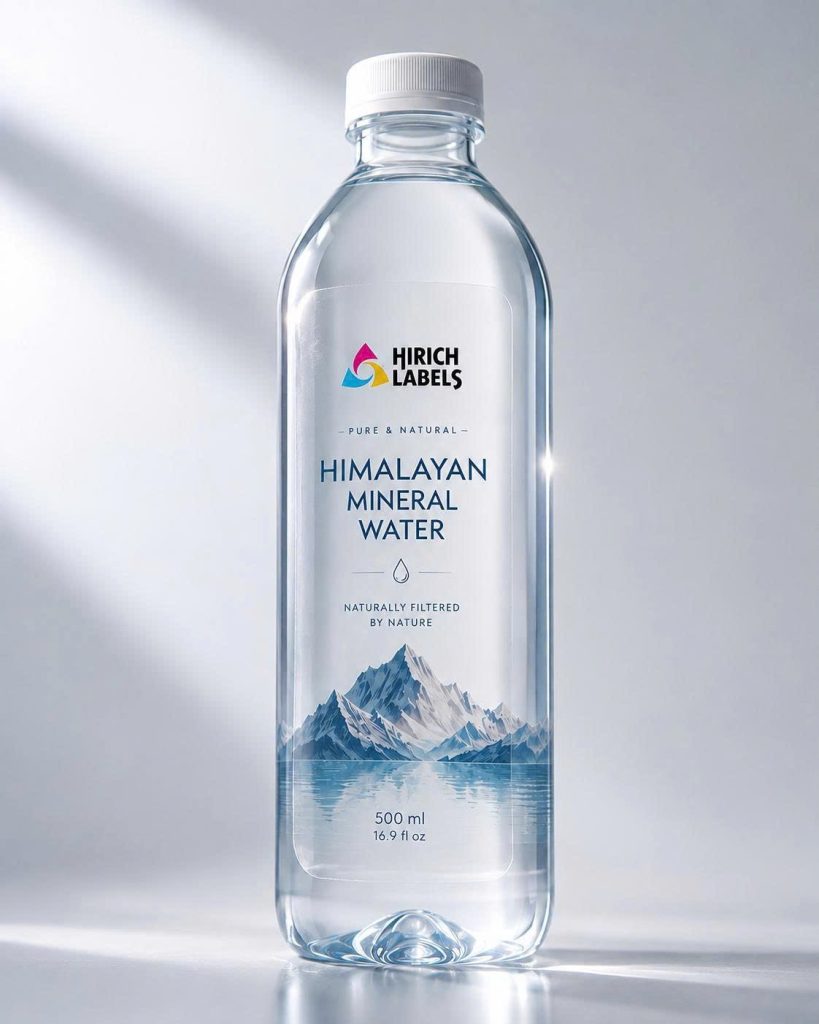
In the premium product segment, transparent labels and the no-label look are becoming the new aesthetic standard. Instead of an opaque white decal that hides the product inside, transparent labels allow customers to see through the label to view the liquid, gel, tablets, or natural colors of the product, creating a sense of purity, minimalism, and luxury. But this is also one of the most difficult label lines to produce: a tiny air bubble, a visible adhesive mark, or even a slight white-base color deviation can destroy the entire premium effect the brand aims to convey.
For B2B businesses, clear labels are not a decision to be made in haste. At least four technical factors must be controlled before placing a print order: film material, clear adhesive, white base printing layer, and bottle surface conditions.
Film materials: clarity determines class
Not all clear films are equally clear. BOPP clear film offers lower cost but only moderate clarity, making it suitable for mid-range products. PET clear film delivers exceptional transparency, nearly glass-like, and is the top choice for premium cosmetics, perfume, serum, and high-end beverage labels. Film clarity directly impacts the no-label look effect: the clearer the film, the more invisible the boundary between label and bottle, creating the illusion that the text is printed directly onto the bottle. Choosing a lower-clarity film to save costs is an unworthy trade-off—the no-label effect will fail, and the entire premium positioning of the product collapses.
Transparent Adhesive: The Most Overlooked Factor
Adhesive for transparent labels must simultaneously meet three requirements: clarity (no yellowing over time), bubble-free application, and strong adhesion on glass or PET bottle surfaces. Low-quality adhesive will yellow within 3-6 months under shelf lighting, creating unsightly discolored patches on the transparent label base—a defect that results in the loss of an entire batch, as it cannot be repaired. Hirich uses a special optical adhesive for our transparent label line, rigorously tested for color stability under UV accelerated aging conditions before being approved for production.
White base printing: the technique that determines text sharpness on transparent substrates
On clear labels, all details that need to be clearly visible (logo, product name, ingredients) must be backed with a white ink layer printed beneath them. If the white back-up layer is too thin, the text will bleed and lose contrast against the product color showing through. If the white layer is misaligned by even 0.5mm from the color layer above, it will create a ghosting effect—a technical flaw that is unacceptable on premium products. Hirich controls the thickness and registration accuracy of the white ink to within ±0.15mm, ensuring crisp text and a white base with no visible edges.
Bottle Surface Conditions: A Key Coordination Factor Between Printers and Customers
The no-label look only succeeds when the bottle surface is completely clean, free of static electricity and dust, and properly surface-treated. Even a tiny dust particle trapped beneath a clear label becomes visibly obvious as a black dot, compromising the entire aesthetic. This is why Hirich requires customers to provide actual bottle samples for trial labeling before production—detecting surface compatibility issues early helps prevent mass wastage and unnecessary downtime on your packaging line.
© Copyright by Hirich Labels.


