

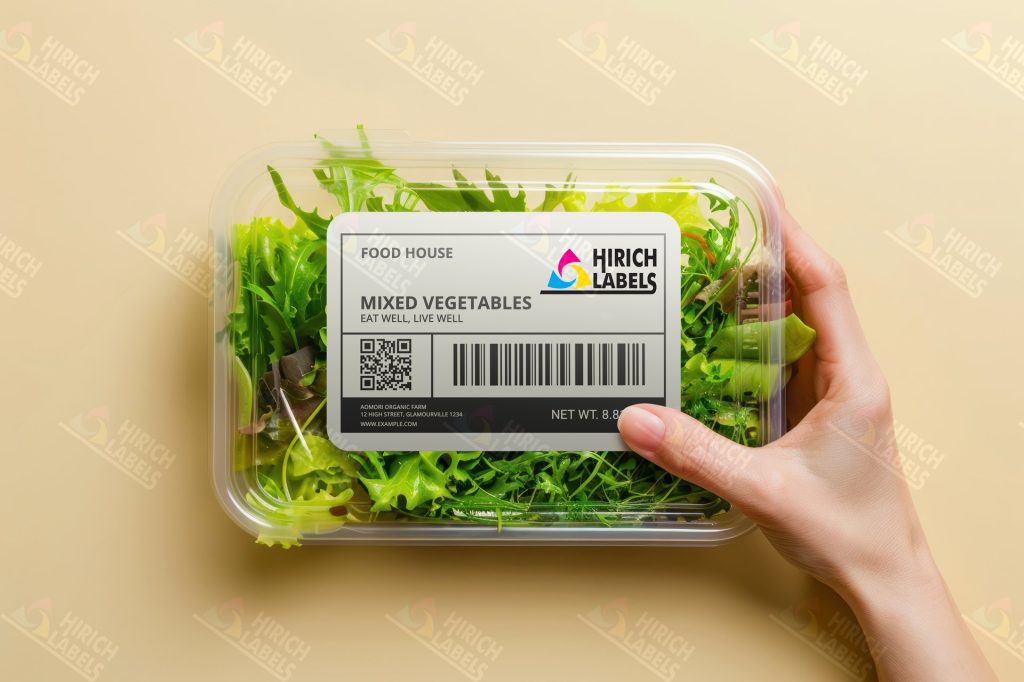
Product labels are where buyers verify trust.
On retail shelves, shoppers often look at labels to determine what a product is, which brand it comes from, how to use it, and whether it can be trusted. For distributors, labels are also where they check barcodes, legal information, expiration dates, and traceability.
Therefore, product labels are not just decorative elements. They are the intersection of brand identity, compliance, retail operations, and user experience.
Identity Information Group
Identification information typically includes brand name, product name, product line, volume or weight, flavor variant, brand imagery, and a short message. This is the section that helps buyers recognize the product and set it apart from other options.
Mandatory Information Group and Usage Instructions
Tùy ngành hàng, nhãn có thể cần thành phần, công dụng, hướng dẫn sử dụng, hướng dẫn bảo quản, cảnh báo, đơn vị chịu trách nhiệm, xuất xứ, ngày sản xuất, hạn sử dụng, số lô hoặc tiêu chuẩn liên quan. Với thực phẩm, mỹ phẩm, dược phẩm và hóa chất, nhóm thông tin này đặc biệt quan trọng.
Barcodes, QR Codes and Traceability Data
Barcodes enable products to enter retail and logistics systems. QR codes can link to usage instructions, traceability, warranty, campaign landing pages, or extended information. For products requiring strict management, serial numbers or variable lot codes can provide better inventory control.
Barcodes and QR codes must be designed with adequate size, sufficient contrast, and proper quiet zones to ensure reliable scanning after printing.
Supplementary Labels and Multilingual Content
For imported or exported goods, supplementary labels help provide additional information in the language and according to the requirements of the target market. Supplementary labels should be placed in a position that does not cover important information, be large enough to read, and be made of materials compatible with the original packaging.
If a product is sold across multiple markets, businesses can use secondary labels, multi-layer labels, or QR codes to reduce the space pressure on the main label.
Even with dense information, the label stays easy to read.
A common mistake is trying to cram too much information into a small space. The result: tiny text, a cluttered layout, barcodes that are hard to scan, and a brand image that loses its appeal. When content becomes overwhelming, prioritize your information hierarchy—decide what needs to be seen at a glance, and what can be moved to a secondary label, QR code, or accompanying documentation.
Information Checklist Before Label Design
- Brand name, product name, capacity or weight.
- Ingredients, uses, directions for use and storage.
- Safety warning if any.
- Date of manufacture, expiry date, batch code.
- Barcode, QR, and traceability information.
- Manufacturer, distributor, or responsible party information.
- Supplementary label content or multilingual versions for multi-market sales.
A good label makes your product clearer, more trustworthy, and easier to manage as it moves through retail, warehousing, or export channels.
© Copyright by Hirich Labels.


