


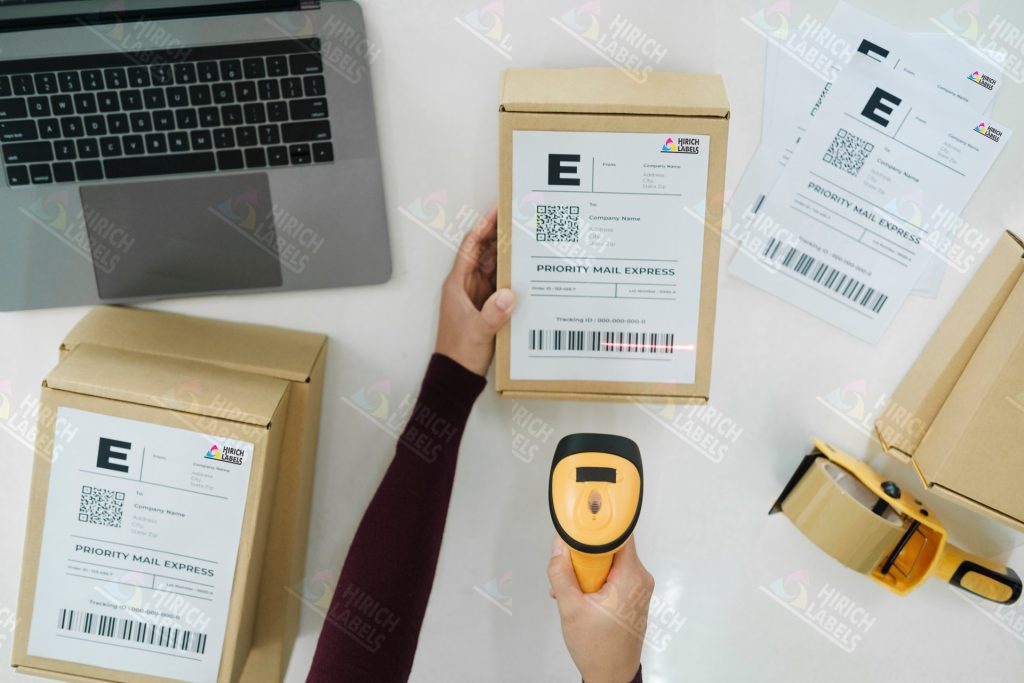
A small label can determine the entire journey of an order.
In e-commerce, shipping labels and barcode labels are more than just stickers—they are the key to getting every order to the right route, the right warehouse, and the right customer. A barcode that fails to scan at a sorting station can send an order straight back to sender. A shipping label smudged by water or torn in the rain can turn a simple order into a lost package.
Therefore, choosing e-commerce packaging labels is not just about finding the cheapest option—they must also meet stringent requirements for durability, barcode sharpness, and resilience throughout the entire shipping journey.
Three Core Label Types for E-commerce Operations
Shipping labels: typically printed on thermal paper or thermal transfer paper, in 100x150mm or 4×6 inch sizes. Direct thermal paper is cost-effective since it requires no ink ribbon, but it tends to fade after 2-3 months and cannot withstand high temperatures. Thermal transfer paper is more durable, making it ideal for high-value orders or long-term warehousing.
Product barcode labels: high contrast between bars and background is essential for accurate scanning at high speeds. Common materials include paper decal or matte BOPP film with permanent adhesive. Available in standard GS1 sizes or custom sizes per marketplace requirements (Shopee, Lazada, TikTok Shop).
Warehouse sorting labels: used in warehouses for route and zone classification. These labels require standout colors, oversized formats, and the ability to be applied quickly to various surfaces, including cartons, mailer bags, and jumbo bags. Available in paper or film with high-tack adhesive, they ensure reliable adhesion on all surfaces.
Which materials for each packaging surface?
For corrugated cartons: kraft paper labels or regular paper labels are a cost-effective choice, with sufficient adhesion on porous surfaces. For PE/nylon mailer bags: BOPP or PET film labels with adhesive specially formulated for low-surface-energy materials are required; otherwise, the labels will peel off on their own as soon as the bags are bent during transit.
Hirich’s sample approval process for e-commerce labels includes: barcode scannability testing on actual scanners at multiple angles, adhesion testing on real packaging surfaces (cartons, mailers, paper bags), and simulation of shipping conditions (vibration, moisture, abrasion). Customers receive test samples before approving mass production, reducing the risk of batch-wide operational failures.
Common Mistakes When Choosing E-commerce Labels
- Using cheap thermal paper means that when your inventory sits in storage for long periods, barcodes fade and become unscannable.
- Choosing regular paper labels for plastic mailer bags—after just one toss, the label has already peeled off.
- Barcode designs that don’t include a quiet zone render them unreadable by scanners.
- Do not test the actual sample on the packaging surface and in simulated shipping conditions.
A single small label can save dozens of hours of complaint resolution and millions of dong in costs from lost return shipments.
© Copyright by Hirich Labels.


