

Construction material labels: a durable information layer for harsh environments
The construction materials industry poses unique challenges for construction material labels: products are often stored outdoors or in open warehouses, directly exposed to cement dust, rainwater, harsh sunlight, and impacts during loading and heavy transport. A label on a cement bag must not only display the brand and technical specifications, but also withstand the entire journey from factory to construction site without tearing, fading, or peeling.
Unlike in-home consumer labels, industrial labels for construction materials must withstand mechanical friction as bags, boxes, and buckets are stacked on top of one another and moved along conveyor belts and forklifts. The surfaces to be labeled are also highly diverse and difficult to adhere to: rough kraft paper bags for cement, corrugated cardboard boxes for tiles, HDPE plastic buckets for water-based paint, and steel pipes for mechanical materials. Each surface requires a different type of adhesive and label material to ensure long-lasting adhesion.
Technical requirements for each type of construction material
Cement and dry mortar labels must withstand environments with fine dust and high humidity. Cement dust accumulating on packaging surfaces can prevent adhesives from making direct contact, reducing bond strength. The solution is a high-tack adhesive capable of bonding through thin dust layers, combined with thick BOPP or PET film to resist tearing when packaging is impacted. Labels must clearly display the cement grade, strength, production date, and lot code for traceability when needed.
Paint and coating labels face a different challenge: chemicals. Paint, paint solvents, and waterproofing agents can corrode printing ink and adhesives if they spill onto the container. Labels for paint pails require PET film or vinyl with chemical-resistant adhesive, UV-cured ink, and a protective laminate layer that resists solvents. HDPE/PP plastic pail surfaces have low surface energy, requiring corona or plasma treatment before application to ensure the adhesive bonds securely.
For flat building materials such as tiles, stone slabs, and architectural glass, labels are typically applied directly onto the product surface. The key requirement here is a removable or ultra-removable adhesive: the label must stay firmly attached during transport, yet peel off cleanly with no adhesive residue when construction workers remove it. Additionally, QR codes and barcodes printed on the labels allow customers to access product information, installation guidelines, and warranty policies.
The Strategic Role of Labels in Construction Supply Chain Management
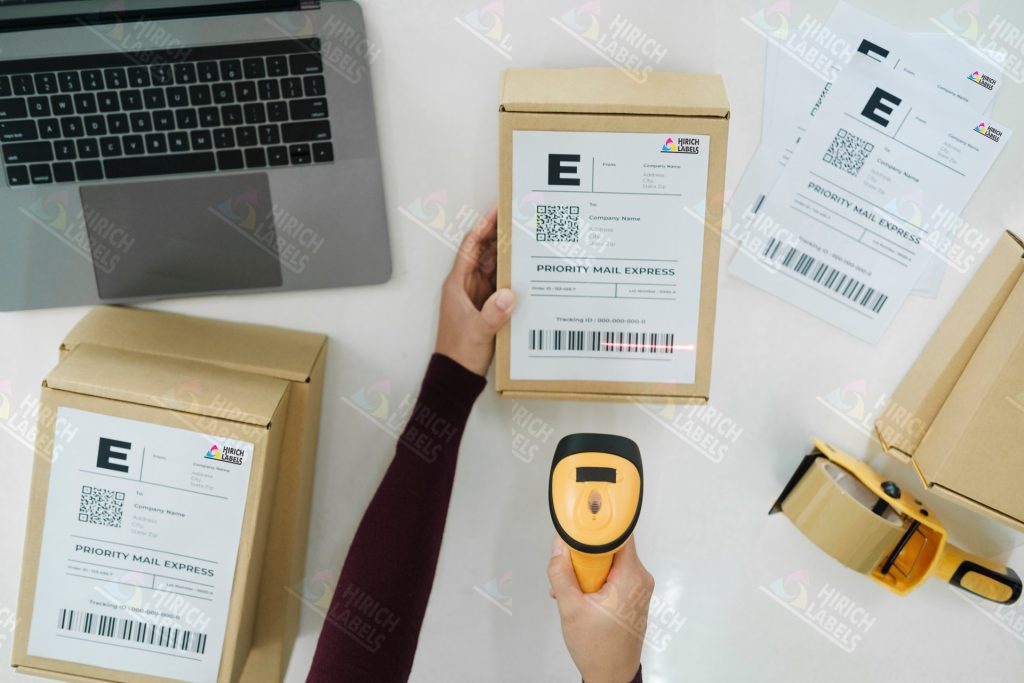
For major construction material corporations, building material labels are also a supply chain management tool: SSCC pallet codes enable tracking of goods from factory to distributors and construction sites, while QR codes allow customers to verify authentic products and access technical documentation. Hirich integrates these solutions into the label production process, ensuring every roll of labels is not only durable in harsh environments but also smart and connected.
Investing in high-quality labels for construction materials is an investment in brand reputation, where a label that remains intact on the structure stands as testament to uncompromising product quality.
© Copyright by Hirich Labels.


