

White labels: a flexible solution for businesses that need control over their print data
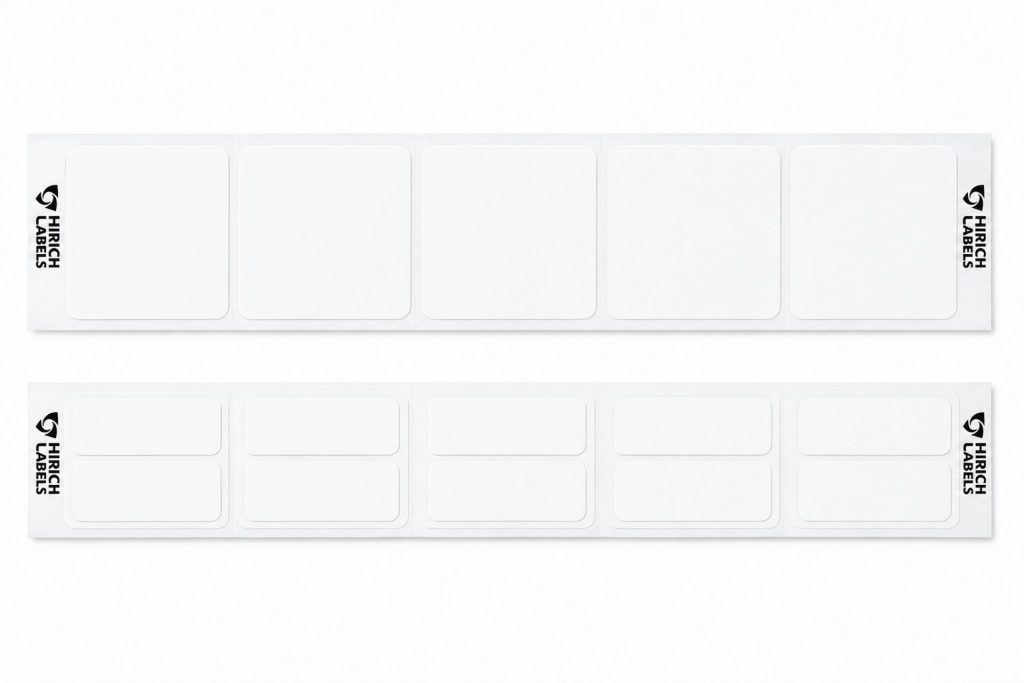
In manufacturing operations and logistics, blank labels are a strategic choice adopted by many businesses: instead of having all fixed information printed at the print facility, they purchase blank decals with standard materials and sizes, then print variable data in-house using thermal or laser printers. This approach delivers three major benefits: reduced inventory of pre-printed labels, flexible information updates by production batch, and cost savings for frequent small-scale print runs.
However, white labels are not the right choice for every scenario. For products that demand high print quality, intricate graphics, or precise brand color accuracy, printing in-house on blank labels with office equipment simply cannot deliver the sharpness and durability of industrial printing. Conversely, for warehouses, labs, distribution centers, and products with data that varies by small batch, white labels are the optimal solution in terms of speed and cost efficiency.
Choosing the Right White Label Materials for In-House Printing
The most important decision when investing in blank labels is choosing a material that is compatible with your in-house printer. For thermal transfer printers, labels require an appropriate top coating to ensure ribbon ink adheres properly and does not smudge. For laser printers, labels must withstand high fuser temperatures without shrinking or adhesive bleeding—a common issue with low-cost labels that causes paper jams and increases downtime. Inkjet printers need labels with a coating that absorbs ink quickly, preventing smudges and improving print speed.
Hirich offers white labels with a wide range of material options: paper decals for indoor applications, BOPP/PET films for humid environments, and direct thermal paper for shipping labels and temporary barcodes. Each material is tightly controlled for thickness, surface smoothness, and dimensional tolerance, ensuring smooth running on all popular printer lines such as Zebra, TSC, Brady, and Brother, while minimizing waste caused by paper jams and printing errors on the production line.
Quản lý kho nhãn trắng: tránh lãng phí và hư hỏng
One often-overlooked aspect of using blank labels is storage conditions. Decal labels, especially thermal paper labels, are highly sensitive to temperature and humidity. Storing blank labels in an overheated warehouse can cause the adhesive to melt or lose its bonding strength; excessive humidity can warp the paper, leading to printer jams. Hirich recommends storing labels at 20–25°C with humidity below 60%, and applying the FIFO (first in, first out) principle to rotate inventory, preventing label degradation and unnecessary waste.
In summary, white labels are not a complete replacement for professional label printing, but rather a strategic supplemental tool for businesses that need speed, flexibility, and on-site data control. Choosing the right materials and compatible printers will help businesses noticeably reduce lead times, lower inventory, and optimize operating costs.
© Copyright by Hirich Labels.


