

Logistics labels: the backbone of the modern supply chain
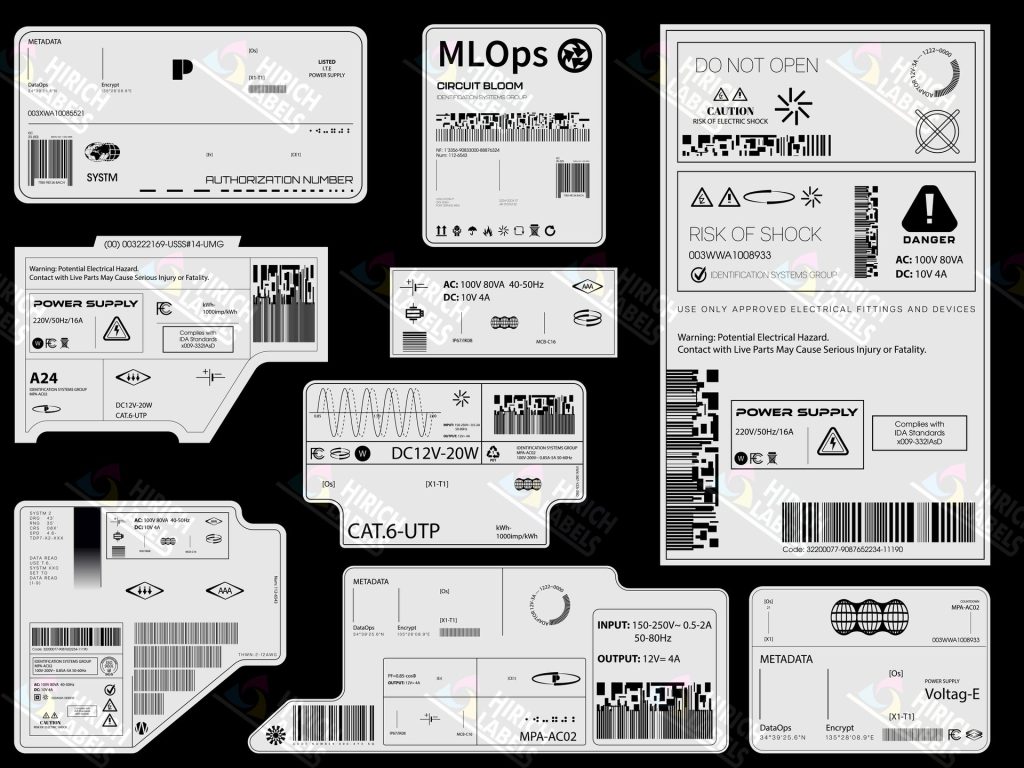
In the era of e-commerce and global supply chains, logistics labels have evolved far beyond their original function as simple address decals. Today, logistics labels serve as critical data nodes connecting manufacturers, distribution warehouses, carriers, and end customers. Each label carries the complete journey of a shipment—from product codes and batch numbers to delivery information and real-time tracking.
Modern logistics businesses operate on three main types of labels. Shipping labels carry sender and recipient information, tracking codes, and freight charges — they are the most common label type in e-commerce and express delivery. Barcode labels are used for warehouse management and inventory control, typically employing the GS1-128 or Code 128 standards to encode product information and storage locations. SSCC pallet labels (Serial Shipping Container Code) represent the international standard for identifying shipping units, enabling pallet tracking throughout the entire supply chain from factory floor to retail point.
Critical Technical Requirements for Logistics Labels
Unlike retail shelf labels, logistics labels must withstand extremely harsh environments: friction from pallet stacking, temperature and humidity fluctuations inside ocean shipping containers, rainwater exposure during loading and unloading, and—most critically—the demand for fast, accurate barcode scanning at industrial conveyor speeds.
Four factors determine the quality of logistics labels: material durability, barcode print quality, adhesive bonding strength on carton/pallet surfaces, and resistance to fading under prolonged warehouse storage conditions. A logistics barcode that is smudged, scratched, or lacking in contrast can bring an entire automated sorting line to a halt, causing delays and driving up operational costs.
Shipping labels used in express delivery typically employ direct thermal paper, offering advantages such as no ink ribbon required, fast printing speed, and low cost. However, thermal paper has the drawback of fading easily when exposed to high temperatures, sunlight, or friction, making it unsuitable for long-term storage. For applications requiring higher durability, Hirich recommends thermal transfer printing technology with resin ribbon on a BOPP or PET film base, delivering superior ink durability with scratch-resistant, waterproof, and chemical-resistant properties.
Logistics label solutions from Hirich
Hirich cung cấp nhãn logistics đa dạng cho từng ứng dụng cụ thể. Với kho vận và TMĐT sản lượng lớn, giải pháp nhãn cuộn in sẵn hoặc in theo yêu cầu trên giấy nhiệt hoặc thermal transfer, tối ưu cho tốc độ in và dán tự động. Với chuỗi cung ứng quốc tế, nhãn film PET chống nước và chống rách đảm bảo mã vạch vẫn đọc được sau hành trình vận chuyển dài ngày qua nhiều vùng khí hậu. Với kho lạnh và cold chain, nhãn sử dụng keo freezer-grade bám dính tốt trên bề mặt thùng carton ẩm và nhiệt độ âm.
Another key differentiator of Hirich is its variable data integration capability: each roll of logistics labels can carry thousands of unique SSCC, QR, or barcode codes, with strict control over uniqueness and scanability. This helps logistics businesses minimize errors, accelerate order processing, and enhance the end-customer experience.
© Copyright by Hirich Labels.


