

Not all paper boxes are as easy to label as you might think.
Many businesses assume that sticking labels onto paper is a simple task. In reality, it’s not quite that straightforward. Corrugated cardboard boxes have uneven, textured surfaces. Coated kraft paper boxes feature an oil layer or polymer film that makes it difficult for adhesive to bond. Art paper boxes (ivory, duplex) have smooth, glossy surfaces, yet they are also prone to peeling if the adhesive lacks sufficient initial tack. Even warehouse storage temperature can affect how well labels adhere to paper boxes.
So how do you choose the right label type and the right adhesive for each paper box surface? This is the key question to consider before you send your quote request.
Classification of paper box surfaces and corresponding adhesive requirements
For corrugated cardboard boxes (kraft / A, B, E flute): the surface is porous and uneven, so labels require permanent adhesive with high viscosity and strong initial tack. Kraft paper decals or standard paper decals with rubber-based adhesive are a cost-effective and efficient choice. Note: avoid overly thin film labels, as the uneven cardboard surface will cause the labels to wrinkle.
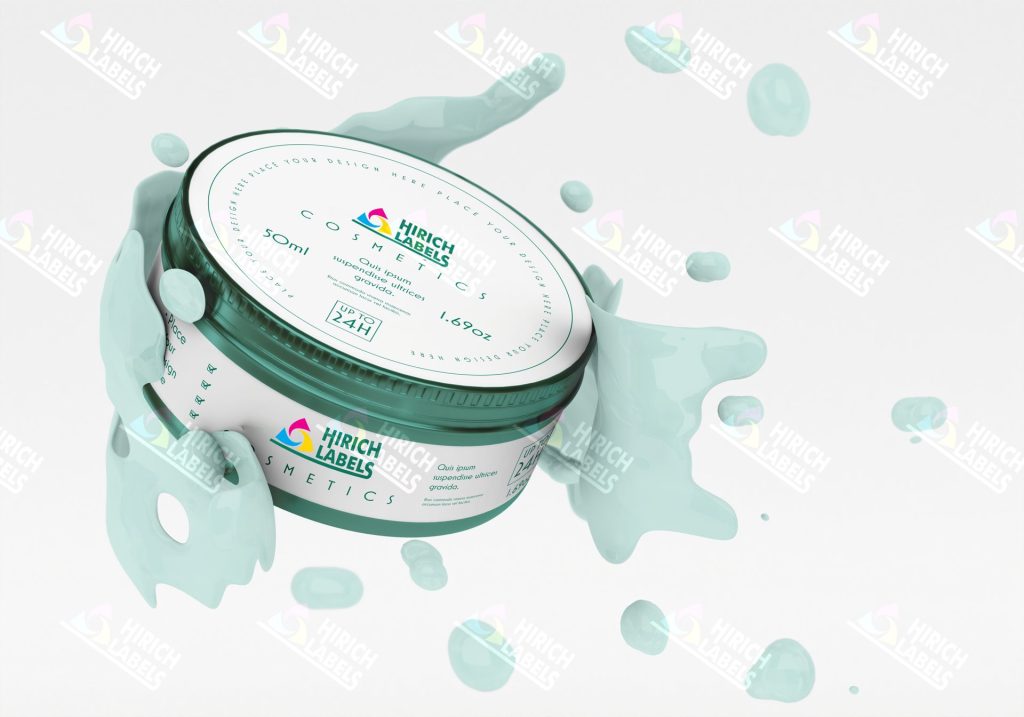
For coated paper boxes (coated duplex, ivory board, art carton): this is a premium packaging line commonly used for cosmetics, food, and gifts. The surface is smooth and glossy but has low surface energy, requiring specialized permanent acrylic adhesive. Matte or clear BOPP film labels deliver a refined finish; laminated paper labels are also a popular choice.
For natural kraft paper boxes (uncoated, cement finish): the raw paper fiber surface absorbs moisture, requiring adhesive with excellent penetration. Kraft paper decals in matching tones preserve the natural aesthetic, commonly seen in the organic food and artisanal handicraft industries.
Direct Printing or Labeling: Which Solution to Choose?
Direct offset printing on paper boxes suits large orders with few variants and designs that remain stable across a season or year. Its strength is consistency—no concerns about labels peeling off. Its drawback is a lack of flexibility when information needs to change by batch, market, or promotional campaign.
Paper box labels are now more flexible: you can print variable information such as production dates, batch codes, QR codes, anti-counterfeit labels, or Vietnamese sub-labels for imported goods. Hirich’s sample approval process helps businesses compare both options: providing test prints directly on the customer’s actual box surface, checking adhesion after 24-48 hours, and advising on the most cost-effective solution—direct printing, label application, or a combination of both.
Label Selection Checklist for Paper Boxes
- Xác định loại bề mặt: carton sóng, giấy tráng phủ hay giấy kraft mộc?
- What conditions must the label withstand: warehouse temperature, humidity, long-distance shipping?
- Do you need fixed or variable information (batch code, QR code, supplementary labels, expiration date)?
- Hand-applied labels or roll labels for high-speed labeling machines?
- Do you have the design file ready with the die-line and bleed area included?
Choosing the wrong adhesive or label material for paper boxes can make your brand lose credibility right on the store shelf. Investing time in real-world sample testing is a step that should never be skipped.
© Copyright by Hirich Labels.


