

Roll labels for automatic labeling machines: why do technical specifications determine production line efficiency?
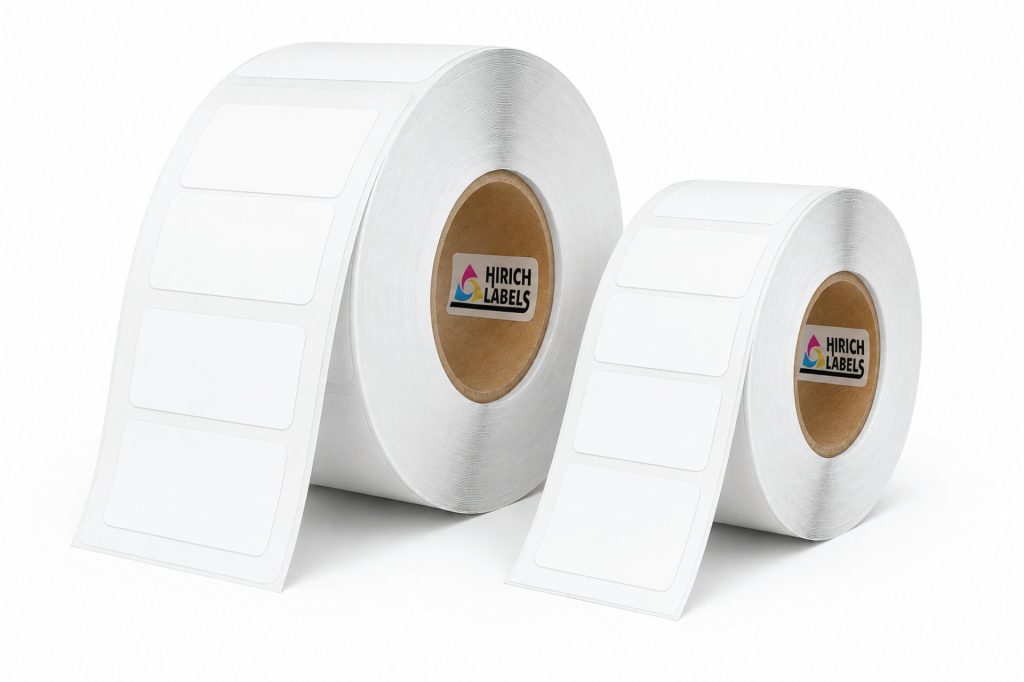
For medium and large-scale manufacturing enterprises, roll labels are an irreplaceable format when operating automatic labeling machines. However, a minor discrepancy in roll specifications—a wrong core diameter, reversed winding direction, or a 1mm misalignment in label pitch—can bring the entire production line to a halt, causing material waste and hours of extended downtime. This is not a printing error, but a synchronization failure between file design and labeling machine parameters.
Hirich approaches roll labels from an operational perspective: every order is checked against four parameter groups before entering production—core diameter (typically 40mm, 76mm, or machine-specific), roll width (1–8, depending on the unwind direction of the applicator), gap between labels (minimum 3mm to ensure stable sensor detection), and maximum finished roll diameter to fit the machine spindle. Miss a single parameter, and the risk of line stoppage is extremely high.
Four technical factors that determine waste on automatic labeling lines
Liner peel force is a technical specification often overlooked, yet it directly impacts waste rates. If the peel force is too high, the labeling machine must increase pulling tension, which can easily tear the liner or label as it passes over the peel plate. If it is too low, labels may detach prematurely before reaching the application point, causing positioning errors. Hirich controls liner peel force within the 50–150 gf/inch range, optimized for labeling speeds of 30 to 200 labels per minute depending on the machine model.
Liner release speed is also a downtime factor if not properly synchronized. When the labeling machine runs at high speed, the liner needs to be rewound smoothly without breakage or tangling. Hirich calculates liner tension, material thickness, and each customer’s actual labeling speed to adjust roll parameters, helping reduce waste by an average of 15–25% compared to label rolls with unoptimized parameters.
The liner material (glassine, kraft, PET) directly affects stability when passing through the optical sensor of the labeling machine. Overly thin liners are prone to tearing at high speeds; overly thick liners reduce the total label footage per roll, increasing roll change frequency and downtime. Hirich recommends 60-65gsm glassine liner for most medium-speed labeling machines, and PET liner for high-speed applicators running above 150 labels per minute to ensure mechanical durability.
How Hirich helps businesses reduce downtime and minimize waste
Before every roll label order, Hirich’s technical team requests the customer’s labeling machine model, actual operating speed, and label unwind direction. Based on that, we configure the appropriate roll parameters, send test samples for trial runs on the real production line, and only begin mass production once the samples pass requirements. This process helps businesses avoid the biggest hidden cost in automatic labeling: downtime caused by labels that are incompatible with the machine.
© Copyright by Hirich Labels.


