


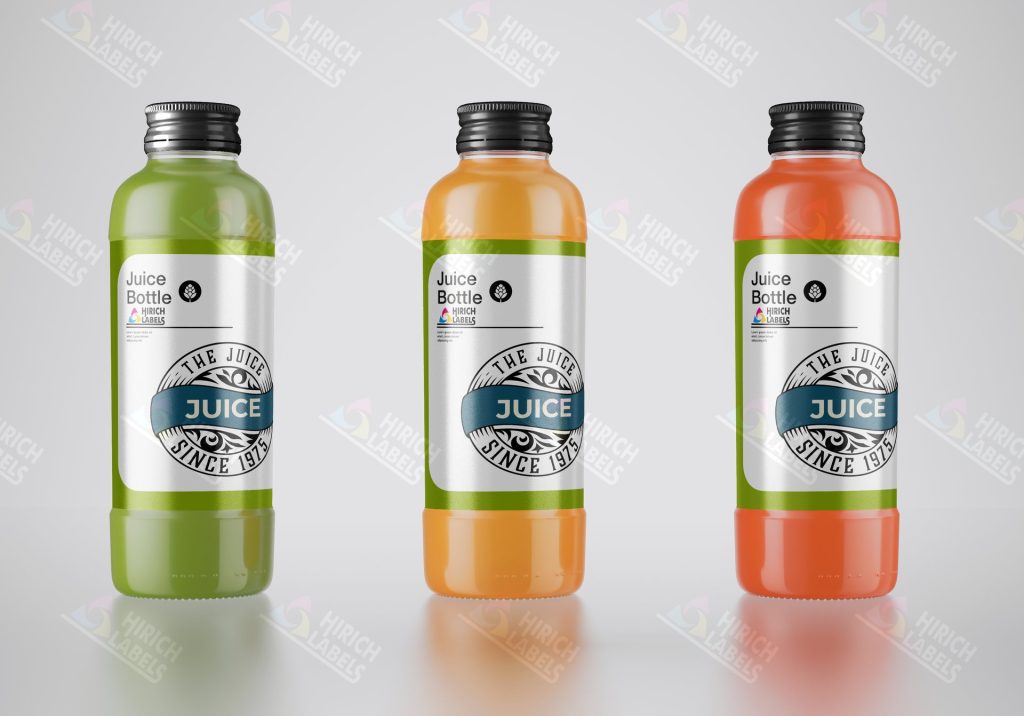
Label color control: why do screens and finished products always differ?
Controlling label color is the most technically vexing challenge in the entire label production chain. Colors on the design screen are RGB—emissive, vibrant, and luminous. Colors on the printed label are CMYK or Pantone—they reflect light and depend on the substrate material, ink type, printing technology, and even the light source under which they are viewed. The same design file printed on glossy white decal produces deeper, more vivid colors than the same file printed on brown kraft paper. The same Pantone color can yield noticeably different results between flexo and digital printing under identical lighting conditions. This is not a defect—it is the physical nature of color in printing.
For a brand, color is identity. A slight deviation on the logo—Coca-Cola red turning into orange-red, Tiffany blue shifting into green—can erode consumer trust and inflict far more damage than the cost of a reprint. That is why a professional color control process is not an expense; it is insurance for your brand equity.
Color Systems in Label Production: Pantone, CMYK, ECG, and Delta E
Pantone (PMS): A pre-mixed color system where each color is printed using a dedicated roller/channel on flexo presses. The key advantages are high accuracy and repeatability, making it ideal for brand colors. The drawbacks include high set-up costs and it is not economical for small orders.
CMYK: Reproduces color by layering four colors—Cyan, Magenta, Yellow, and Black—in varying proportions. Cost-effective for small to medium orders and ideal for digital printing. Limitation: many Pantone colors cannot be reproduced accurately with CMYK, especially vibrant orange, neon green, deep navy blue, and purple.
ECG (Extended Color Gamut): Expands CMYK by adding 2-3 supplementary colors (typically Orange, Green, Violet) to broaden the reproducible color space. ECG enables most Pantone colors to be produced with a fixed 7-color system, eliminating the need for ink changes between orders and dramatically reducing downtime for printers running high volumes of small-batch jobs.
Delta E: The unit measuring color deviation between the standard sample and the finished product. Delta E below 1 is a difference imperceptible to the naked eye. Delta E of 1–2 is a very slight difference, only detectable when placed side by side. Delta E above 3 becomes clearly noticeable. For brand colors, Hirich keeps Delta E below 2.5 during mass production.
Hirich’s Color Sample Approval Process: Eliminating Subjectivity, Ensuring Exact Repeatability
Traditional color approval processes often rely on subjective visual assessment: the customer holds a printed sample, looks at it under office lighting, and says “a bit darker” or “slightly too red.” This approach creates an endless revision loop because it depends on the human eye and uncontrolled lighting conditions. Hirich completely replaces subjectivity with data: every color sample is measured using a spectrophotometer under the standard D50 light source (daylight), and the results are recorded as Lab values and Delta E compared to the reference color. Customers receive a color data report along with actual samples applied directly on the production material—not on proof paper. This means: the color approved today will be the color reproduced in every future production run, regardless of the machine operator, work shift, or weather conditions.
Beyond data, Hirich also inspects color under three different light sources (D50, D65, A) to ensure labels display accurate color in every environment: on supermarket shelves under fluorescent lighting, outdoors in natural light, or indoors under warm lighting. This is the standard applied in the pharmaceutical and high-end cosmetics industries, where color deviation can result in batch rejection.
© Copyright by Hirich Labels.


